





Sapporo at 150: Brewing the next chapter


The Japanese beer brand marks 150 years with a Manila celebration—and a look at how it plans to carry its story forward.

Sapporo’s Living Legacy
A 150th birthday is reason enough to look back. For Sapporo, it was also a chance to look ahead.
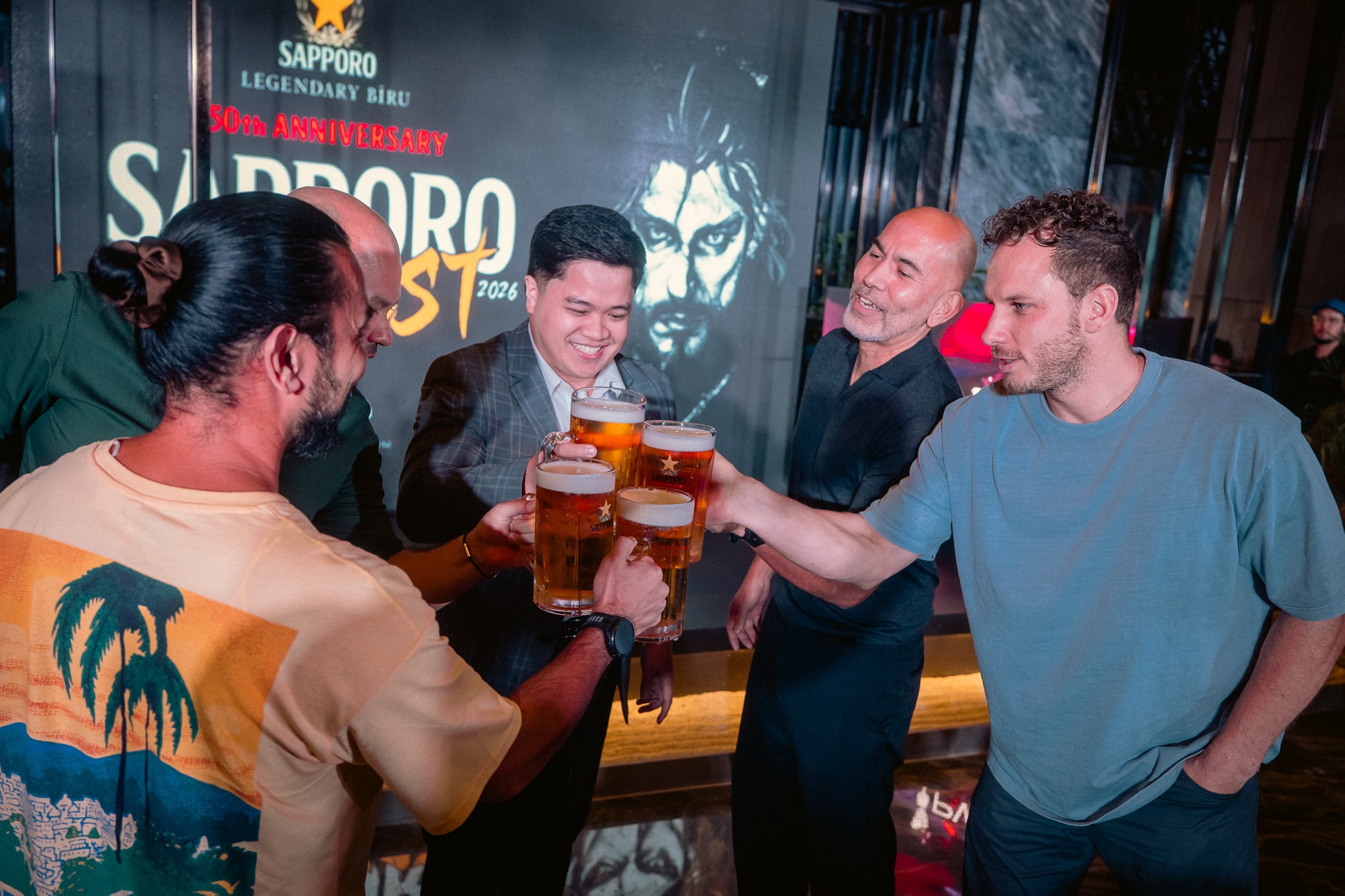
At the Sapporo Beer Fest at Hotel Okura Manila on September 19 and 20, the brand did something more interesting than simply recite its history. Glasses filled quickly as guests moved between Japanese dishes, freshly poured beer and a room lit by the brand’s familiar gold star. The atmosphere felt less like a museum tour and more like what a beer milestone should be: conversation, shared food, and the weight of a century and a half of continuity sitting lightly on the present moment.
For Sapporo Breweries Japan Deputy Manager Haruka Murakami, the anniversary embodies a deliberate philosophy. The company’s vision is to pioneer the legacy of tomorrow—a phrase that captures the tension at the heart of any heritage brand. Respect the history, but do not get stuck in it.
Murakami has managed the Philippine market for around two years. This September, he began passing that responsibility to fellow Deputy Manager Tatsufumi Oishi. The handover comes at a symbolic moment—just as Sapporo transitions from celebrating its first 150 years into whatever comes next.
Why the Philippines matters
For Murakami, the Philippines represents more than market opportunity. He specifically credited local partner Philippine Wine Merchants for how Sapporo is presented here, saying PWM understands how to carry the brand’s “worldview” across restaurants, bars and retail spaces. “In the Philippines, our partner, Philippine Wine Merchants, they are very good at expressing our correct worldview, our brand worldview,” he said.
Murakami described Sapporo Premium Beer as authentic, modern and distinct. “The Philippines is one of the most important countries to realize our worldview in the market,” he said. He also acknowledged that there is still plenty of room for Sapporo to grow locally in terms of sales volume, making the Philippines both a brand-building market and a market with room to expand.
For Oishi, who is taking over the Philippine market, the priorities are clear: build awareness, strengthen Sapporo’s presence and grow sales. “We’d like to create a good brand in the Philippines, and also sales, of course,” he said.

A 150-year-old story, told through manga
One of the more unexpected parts of Sapporo’s anniversary is manga. In selected restaurants, consumers can find the company’s history presented in Japanese comic-style illustrations, with QR codes leading to deeper storytelling. For a beer brand born in the 19th century, it is a playful acknowledgment of how to introduce heritage to people discovering it now.
By telling its unique story through a medium that speaks to younger audiences, Sapporo can convey what makes it distinct from other beer brands. The company’s core demographic remains consumers between 25 and 39 years old—particularly urban drinkers and creative thinkers. Manga is not a dramatic departure in direction; it is simply another doorway into the brand, a way of saying that a 150-year legacy can live in many languages.
Sapporo has also marked the milestone with special packaging in overseas markets. A limited 150th-anniversary can featuring the company’s first brewmaster was released internationally this year. Though the commemorative design did not reach Philippine shelves, Murakami hinted that Filipino consumers may get something of their own. When asked about a special edition for the Philippines, he smiled and looked ahead: next year, perhaps. A different version, but maybe one will come.

Celebrating 150 years in the room
At Hotel Okura Manila, the milestone felt lived-in rather than ceremonial. There were nods to tradition—the gold star, the Japanese food, the carefully curated selection of Sapporo varieties—but also clear signals of where the company wants to go next. Manga storytelling. Limited-edition packaging. A new manager taking the helm of the Philippine market. A beer brand does not celebrate 150 years by looking only backward.
For Murakami, the Philippines has been part of the story for two years. For Oishi, it is now his turn to take it forward. And for Sapporo, the milestone is less a finish line than another starting point.
The next chapter is already brewing.


