





BTS’ ‘Arirang’ experiment takes shape onstage


GOYANG, Gyeonggi Province — When Netflix’s documentary “BTS: The Return” premiered on March 27, one scene stood out for its tension: Bang Si-hyuk, HYBE chairman, and the members of BTS sat around a table debating whether to incorporate “Arirang,” a traditional Korean folk song, into their new hip-hop track “Body to Body.”
Some members voiced concern about foregrounding such a weighty cultural symbol. Bang argued that in a stadium of 60,000 to 70,000 people — with more than half likely to be international fans — a mass singalong of “Arirang” could become an iconic moment.
READ: Live Nation exec laments false information on BTS Manila concert
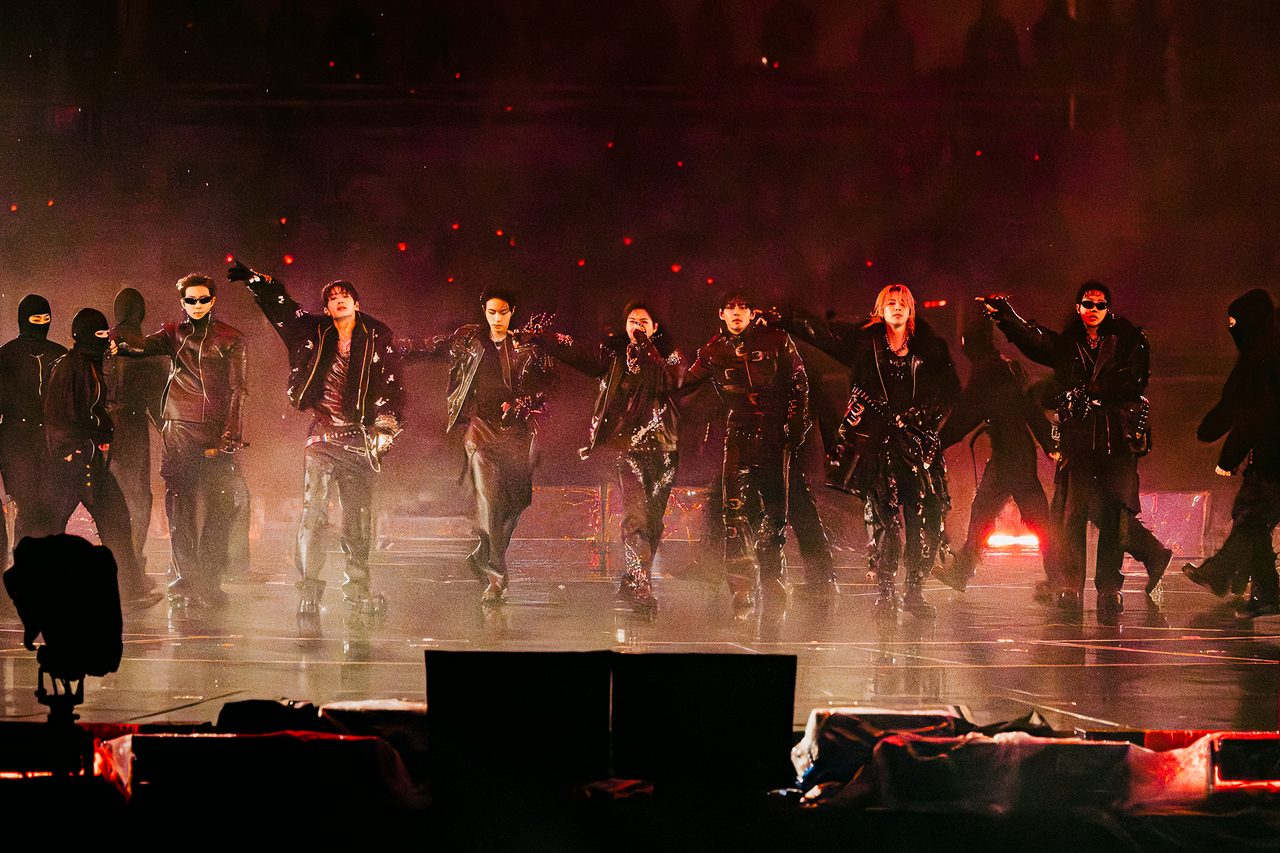
Presented as the 15th song on the second evening of the “Arirang” world tour at Goyang Stadium on Saturday, the track gained new coherence through its staging. As the song passed the 1:50 mark, performers clad in flowing white formed a circle around the stage. When the “Arirang” segment began, LED flags and ribbon effects — reminiscent of traditional “sangmo” hats — created a visual echo of “ganggangsullae,” a Korean folk dance associated with the harvest season.
The result made Bang’s earlier vision more persuasive.
The full-scale audience singalong he predicted has yet to materialize. With the album released less than a month ago, and with a large share of international attendees at the Seoul shows, the moment has not fully taken shape. Still, as scattered voices began to follow the refrain, it was easy to imagine how “Arirang” might resonate across an entire stadium one day.
READ: BTS kicks off ‘Arirang’ world tour: 8 songs we hope to see in the setlist
Tradition beyond the title
When BTS first announced “Arirang” as the title of its fifth full-length album, expectations were high over how deeply traditional Korean elements would be woven into the music.
Yet upon release, aside from “Body to Body ” and “No. 29,” the connection felt less pronounced, raising questions about the choice of title.
On stage, however, the picture shifted.
The “Arirang” world tour, as presented in the Goyang shows, revealed a more deliberate effort to embed Korean aesthetics and sensibilities into the group’s performance. BTS said the album reflected a return to its origins — a reconsideration of its roots and identity — and that it would be expressed through a distinctly Korean emotional lens onstage.
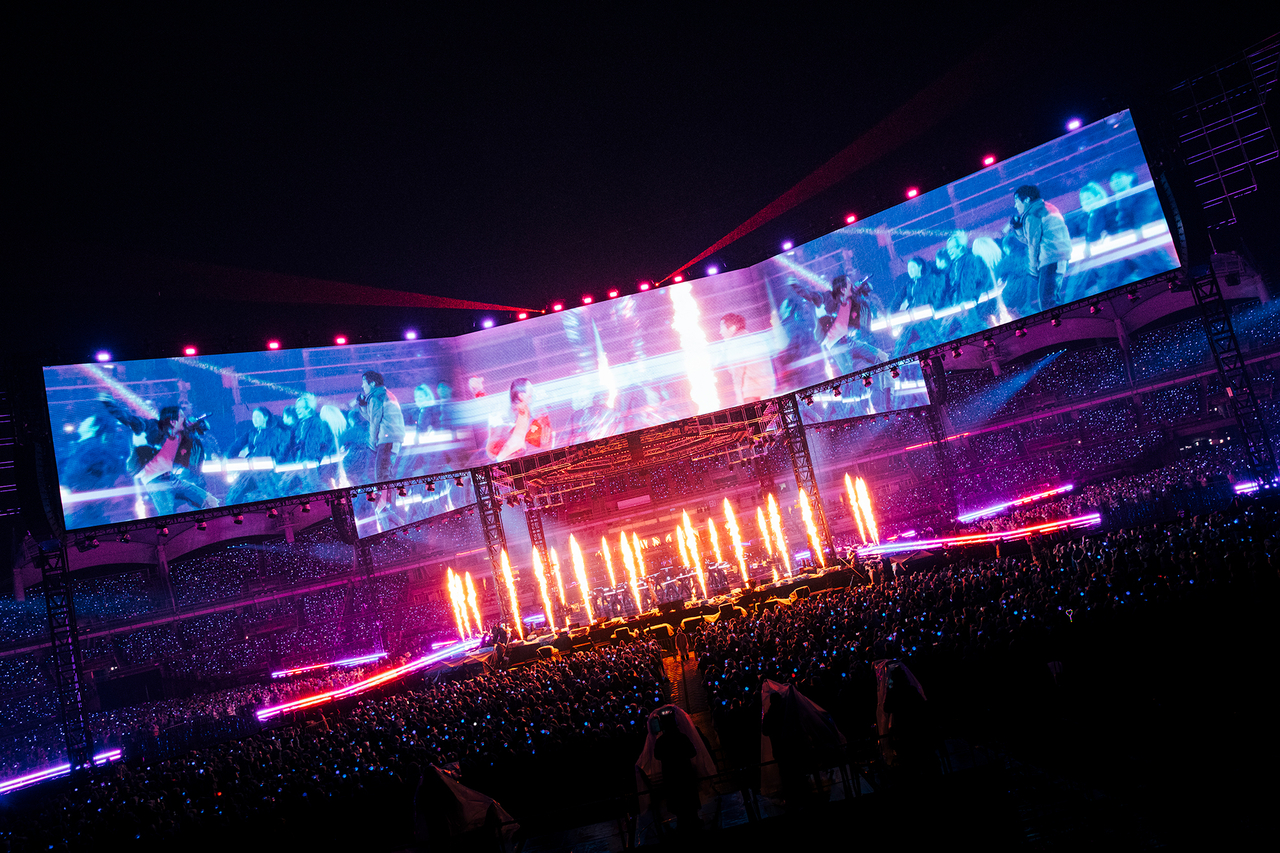
The stage design reinforced that intent. A pavilion inspired by Gyeonghoeru, the royal banquet hall of Gyeongbokgung, stood at the center of the 360-degree stage, reimagining a communal feast in a modern concert setting. The stage floor drew from the taegeuk symbol seen on the Korean flag, and its extended platforms were inspired by the flag’s geon-gon-gam-ri trigrams.
Traditional motifs continued throughout the performances. During “they don’t know ’bout us,” dancers incorporated imagery inspired by Korean masks, reinterpreted through digital visuals. In “Merry Go Round,” large flowing fabric props evoked movements drawn from “seungmu,” a Korean folk dance.
View this post on Instagram
A new chapter, tested in full
At its Korea shows, BTS performed 22 songs per show, with 13 drawn from the new album. All but one track — “No. 29” — made it into the setlist.
The group framed the Goyang concerts as an opportunity to present what it calls the “current BTS,” shaped by years of evolution. Big Hit Music has described the tour as a turning point marking the beginning of “BTS 2.0,” a new chapter not directly tied to the group’s prehiatus narrative but rather the start of a different journey.
That shift is reflected in the production itself.
For the first time in a concert setting — outside of fan events such as the 2019 muster “Magic Shop” — BTS adopted a full 360-degree stage, reshaping the concert experience.
“We haven’t done a 360-degree concert in a long time,” member Jin said early in the show. “It feels incredible to be surrounded by Army (BTS’ fandom name) from every direction.”
Jimin echoed the sentiment, noting that the group sought to experiment in multiple ways with this release and tour, following a four-year gap between albums and a six-and-a-half-year break from a full-scale concert tour.
The Goyang leg concluded on Sunday. BTS will next perform at Tokyo Dome on April 17-18 before continuing the tour across 34 cities worldwide, with a total of 85 shows spanning North America, Europe, South America, and Asia.


