





Culture scholars say ‘Amaya’ is inaccurate, misleading
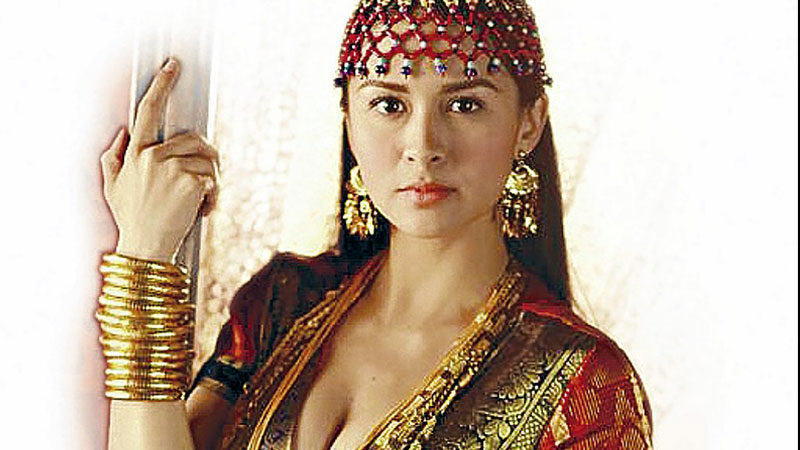
MARIAN Rivera as Amaya
ILOILO CITY – An award-winning epic-chanter who belongs to an indigenous group on Panay Island has raised concerns over the depiction of its cultural beliefs and practices on GMA 7’s new series, “Amaya.”
Federico Caballero, 73, an elder of the Panay-Bukidnon community, said that, while the show may be fictional, the portrayal of its people’s practices, terms and beliefs are inaccurate. “Some of the things depicted do not reflect our culture,” Caballero told the Philippine Daily Inquirer.
Caballero is among 12 National Living Treasure awardees of the National Commission for Culture and the Arts (NCCA). He was recognized in 2000 for his work in the documentation of the oral literature, particularly the epics, of his people which was nearing extinction, according to a citation posted on the NCAA website.
About the Kapuso series, Caballero objected to the characterization of a supposed binukot (well-kept maiden) – Amaya, played by actress Marian Rivera.
At times offensive
Article continues after this advertisementIn an article posted on the network’s website, www.gmanews.tv, the show’s producers and writers said Amaya’s character was inspired by the binukot of the Panay-Bukidnon indigenous people. The show, which premiered on May 30, liberally uses words in Hiligaynon and Kiniray, languages associated with the Panay-Bukidnon people.
Article continues after this advertisementCaballero said it was inaccurate, at times offensive, to show supposed binukot and members of the community half-naked or wearing skimpy clothes. “Our people, most especially the binukot, are conservative. We wear clothes that hardly expose skin,” he stressed.
Caballero’s mother, Preciosa Cataluna-Caballero, was a binukot from birth until she was (engaged to be married at 8 years old and) wed at 12 to a 15-year-old. She died in 1993.
Called Panay-Bukidnon or Sulodnon by scholars, the community is the largest indigenous group on Panay Island, living in the mountains of Tapaz and Jamindan towns in Capiz and in the towns of Calinog and Lambunao in Iloilo. The National Commission on Indigenous People (NCIP) estimates their number at 15,000 in Tapaz, 12,000 in Calinog and 6,000 in Jamindan.
The community, which also refers to its members as Tumanduk, has a rich oral tradition that consists of legends, epics and recorded events. The sugidanon (epics chanted in the archaic Panay language called the Dagil or Ligbok) tell the story and exploits of their local heroes.
The community’s rich oral literature is likewise expressed in the dilot (love songs), talda (repartee) and ulawhay (chanted narrative).
Anthropologists have recorded nine epics chanted for at least 162 hours. These epics are known to provide insights into the history, psyche and culture of the pre-Hispanic Panay Bisayan.
Caballero said Amaya’s character becoming a warrior, is particularly misleading because binukot are not allowed to be exposed even to sunlight – which accounts for their often fair complexion. They are trained to be adept epic-chanters and dancers, and to play native musical instruments, he said, adding that binukot command a much higher dowry than most maidens because of these physical attributes and skills.
Dr. Alicia Magos, a noted anthropologist and retired professor of the University of the Philippines in the Visayas, has conducted extensive studies on the Panay-Bukidnon community. She said she has received complaints about the portrayal of the indigenous people, and especially the binukot, in “Amaya.” Magos said, “The use of the word binukot, detached from its proper historical and cultural context to represent characters in a fictional story, may be deceptive.”
GMA 7 rejoinder
Suzette Doctolero, the show’s head writer,” told the Inquirer last Friday: “‘Amaya’ is a work of historical fiction. We did research on pre-Hispanic times and found that there were binukot throughout the archipelago and in other Southeast Asian countries, as well as areas populated by Austronesian peoples. There’s a similar practice among Samoans.”
Doctolero said the show did not depict just the Panay-Bukidnon tribe. “It’s about the islands before the Spaniards arrived.”


